• Home
    • About
      • Contact
      • The Library
        • Sound Library
          • Complete Sound List
            • License Agreement
            • Stephan Schütze
              • Professional Services
                • Biography
                  • Scores
                    • Music
                    • Videos
                    • Reviews
                    • Blog
                    • Tutorials
                      • Glossary
                        • Audio Editing 101
                          • Microphones 101
                            • Pitch and Time Manipulation
                              • Location Recording 101
                                • Creating Seamless Loops
                                  • Noise Reduction
                                    • Advanced Location Recording 101
                                      • Understanding Positional Sound
                                        • FMOD 101
                                          • Using XACT for Sound Design
                                            • Sound Design Methods
                                              • Creating Explosions
                                              • Links
                                              Aquarian H2a XLR 06/18/2009
                                               
                                              Initial Thoughts
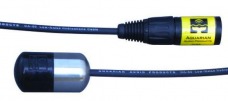
                                              The Aquarian H2a XLR is a purpose built underwater microphone designed to connect to any standard audio system via an XLR connector with phantom power. The entire unit is sealed against water and can be purchased with a range of cable lengths to allow recording at greater depths. The average unit comes with a 9 meter cable, but it is possible to get cables as long as 300 meters. 

                                              My H2a came about through somewhat unusual circumstances. I had purchased an Aquarian H3 years ago but I felt it had never really worked as I expected. At the time I was not in a position to do much about it as soon after I purchased it I relocated to Japan for three years. When I returned to Australia, on a whim I contacted the manufacturer to see if it was possible to get the unit fixed at my expense. The owner of the company replied and indicated he was very sorry that I had not had a positive experience with the H3 and offered to help me with a new unit at cost price. Considering my original unit was well out of warantee this was really good service. I had always wanted the hydrophone to work well as I had lots of ideas for using it, so the opportunity to get a replacement had me really excited.

                                              On the day it arrived I had the H2a in the water within about 30 minutes, (it helps when you live 300 meters from the bay) The sound was great, even if all I could hear was the clicking of Krill in the bay. The point was that it was clean, clear and undistorted. Over the following few days I recorded a variety of boats and other nearby water vehicles. The unit is exactly like any microphone except it has a lead attached to it that happens to be 9 meters long and waterproof. I also bought the contact adapter that covers the head of the microphone and allows it to be used as a contact mic. I still haven't gotten around to recording my heartbeat yet, but that is on the list.

                                              Technical Data
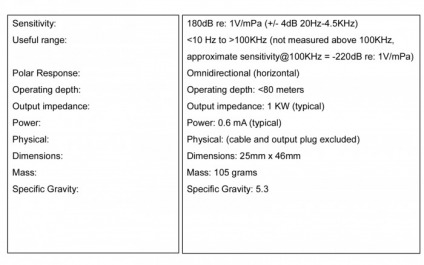
                                              Picture
                                              Picture
                                              Later Observations
                                              After some use the H2a still stands up as being an effective underwater recording device. I am not aware of the complete range of other hydrophones that are available, but I do know that one on the market costs around $6000, so at about $170 US the H2a is cheap enough to get one just because it might be fun to play with occasionally, let alone for serious underwater sampling.
                                              It captures crisp good quality sound and is generally very easy to use. The only real issue I have is that the model I have has a 9 meter cable which is great for getting access to deeper water or further out from the bank, but I find the cable gets tangled often and I think I will need to start using a line reel or something similar to wrap it around when I am not using it. The cable is permanently attached to the mic so obviously I need to be careful not to allow it to bend or twist too much.'This is just the nature of having nine meters of cable and is not a specific issue with the H2a

                                              So far I have found the contact mic attachment to be less usable than I had hoped. It will pick up fairly strong vibrations and transmit them to the mic diaphragm, but I have found that it struggles with weaker vibrations. It certainly can't capture the blood moving under the surface of your skin which one of the previous Aquarian mics was capable of. However this ability in the earlier mics was due to them having a far more exposed diaphragm so its probably a good thing.

                                              I have captured some fantastic material with this microphone from being dragged behind a moving boat to recording compressed air being released underwater. For the price this is a must have for any sound designers collection, it simply opens up too many opertunities for new and interesting sounds to left out.

                                              In the real world
                                              One of the techniques I use for sound design is to create sounds in real-time from many raw sound sources. The H2A is very useful for this method as I can collect a selection of raw material that in itself is not very spectacular, but when combined to create complex sound events can produce great results.

                                              The following sound event has been created out of simple sounds such as throwing a heavy object into the water, or recording the bubbles released from a compressed air can. Individually the sounds are all available within the library. The composite underwater explosions created as a result of combining these simple elements are also included in the library.

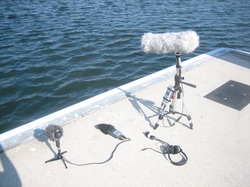
                                              The H2A is capable of capturing a great range of material recording in an underwater environment.
                                              Picture

                                              Verdict

                                              Picture
                                              Good
                                              Excellent unit for the price
                                              Solid build
                                              It does what it is designed to do

                                              Bad
                                              Longer cable lengths can get difficult to manage

                                              Price
                                              US $169.00  -3 meter cable (10 Feet)

                                              Website
                                              www.afabsound.com/


                                              Aquarian H3 08/17/2008
                                               
                                              This is effectively a mini review. I purchased the H3 many years ago and I never seemed to be able to use it correctly. The sound was always corrupted but being such an unusual piece of equipment it was difficult for me to know what to expect, so I was unsure if there as an issue with the equipment or my expectations. I was unable to take any action on this as shortly after I purchased the H3 I moved to Japan for several years. I was extremely lucky that when I contacted the manufacturers several years later they were prepared to help out. This was far more than I expected as it had been years since I purchased the device.

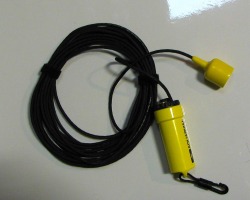
                                              Comparing the H3 with its newer cousin the H2a XLR there are some immediate differences that are worth mentioning. The H3 only had a mini jack output and so the quality of its output was not quite as good. Also it required an internal battery for power where the H2a now uses phantom power. I did like the more direct diaphragm access on the H3, but I suspect the metal shell of the H2a is much stringer and will increase its longevity.

                                              The biggest feature of any of the Aquarian products is they are excellent value for money. At only a few hundred dollars they become a piece of equipment that every sound designer should have, and compared with other commercial hydrophones they can be as little as 10% of the cost of other underwater mics.

                                              Website
                                              www.afabsound.com/
                                              Picture


                                                Reviews

                                                Reviews of the equipment used in the creation and ongoing development of Sound Library

                                                Categories

                                                All
                                                Akg
                                                Aquarian
                                                Computer
                                                Dell
                                                Digital Recorders
                                                Dpa
                                                Edirol
                                                Equipment
                                                Lowepro
                                                Microphones
                                                Rode
                                                Rycote
                                                Sennheiser
                                                Shure
                                                Zoom

                                                RSS Feed


                                              Sound Library www.stephanschutze.com
                                              • Home
                                                • About
                                                  • Contact
                                                  • The Library
                                                    • Sound Library
                                                      • Complete Sound List
                                                        • License Agreement
                                                        • Stephan Schütze
                                                          • Professional Services
                                                            • Biography
                                                              • Scores
                                                                • Music
                                                                • Videos
                                                                • Reviews
                                                                • Blog
                                                                • Tutorials
                                                                  • Glossary
                                                                    • Audio Editing 101
                                                                      • Microphones 101
                                                                        • Pitch and Time Manipulation
                                                                          • Location Recording 101
                                                                            • Creating Seamless Loops
                                                                              • Noise Reduction
                                                                                • Advanced Location Recording 101
                                                                                  • Understanding Positional Sound
                                                                                    • FMOD 101
                                                                                      • Using XACT for Sound Design
                                                                                        • Sound Design Methods
                                                                                          • Creating Explosions
                                                                                          • Links
