|
Initial Thoughts I heard about the Zoom H1 before they were available in Australia and decided I would probably purchase one fairly soon after they became available. I have used various Zoom recorders for some years I and still consider them one of the best units you can buy in their price range and beyond their price range. I knew the H1 used the same built in microphones as the H4N and having used the H4N extensively I knew the H1 would be useful. Initially the unit was very much as I expected it. It is a very small, easily portable device. It is not as robust as the H4N which was disappointing, but for the price this is not entirely unexpected. Zoom have done a very good job of creating a small unit that has only the features it needs and this has one very welcome consequence. The larger units such as the H4 and H4N have a series of features that allow users to capture sounds in different ways as well as adding effects and file management functions. As a result the bootup sequence for these untis is longer than I would prefer. I often have to wait up to 30 seconds from switching on the H4N before I am able to record soemthing, and I have missed recording opertunites in the past because of this delay. The H1 by comparison is a very simple unit and I timed it at under 5 seconds between switching it one and being able to record. This is exactly what I need from a device that I carry everyday in case of unexpected recording opportunities. 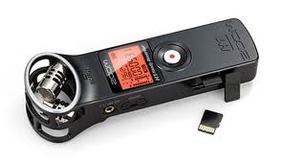 Later Observations The H1 functions in similar ways to other Zoom recorders. It utilises micro SD cards which make files transferring very easy. It is capable of using SD cards up to 32Gb and a single AA battery will last for well over 5 hours. This allows for considerable recording time even at the highest sample rate of 96KHz/24bit. The Microphones themselves are comparable to the H4N in record quality, but they seem to be more susceptible to outdoor wind noise on this unit. I would always recommend using wind protection whenever recording out doors, but with this unit ia wind jammer is a must have accessory. Because of the limited functionality of the H1, once switched on it is already in preview mode and the input levels are displayed. This allows for one touch recording which also adds to the ease of capturing unexpected sounds. It would have been nice if they had included a pre-record feature, which would have been possible as this unit does have some on boa5rd memory. I am not sure if such a feature would have increased the boot-up sequence, but it would have made this the perfect unit for capturing surprise sounds The low price of this unit also makes it ideal for students or beginners who want something to experiment with and do some simple sound recording. In the Real World For me the H1 works very well as a device that can be used for unusual situations. Being able to place an entire unit in a small space and know that it can recording continuously for many hours can be extremely useful. It is also small enough that I can carry one with me everywhere more conveniently than its big sister the H4N. One of the main uses I have had for the H1 since I purchased one is for capturing the sounds of aircraft from within the cockpit while they are flying. This unit is so small that the Pilots I work with can simple place it in a leg pocket and forget it is there. While it will not ever record at the same quality as a more expensive unit being used with high end microphones, the reality is I would never be able to get a larger unit into many of the aircraft that I have recorded, so from that point of view it has become a situation of the H1 or nothing. That is a very simple decision to make. The following is a recording of a World War 2 Mustang Fighter plane recorded from inside the cockpit during take-off using the H1 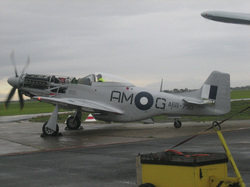  Good
Inexpensive Simple to Use Quick to get recording Bad Very susceptible to wind noise Not very durable Website http://www.zoom.co.jp First Impressions I recently had the opportunity to try out an MD 46 and it just so happens it might be the perfect microphone for a new project I am working on for the website. I am collecting a series of words spoken by native speakers in a variety of languages and the specifications for the MD 46 look very promising. The MD 46 is designed specifically to capture clean vocal recordings. The manual describes it as a microphone specifically created for TV and radio reporting. The unit itself is fairly long and sturdy enough to cope well with day to day use, but it is not overly heavy or awkward to use. I am going to be interested to see how it deals with wind noise as it is built with a double layered wind shield to prevent wind noise so I plan on using this directly without added wind protection to see how it copes. Technical Data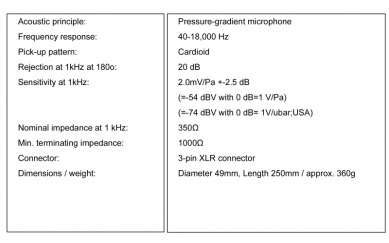 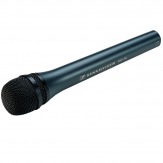 Later Observations The MD46 is designed primarily as a journalists microphone, as such perhaps I am not the best person to be defining if it is a good piece of equipment or not but as a mic for vocals, especially in an environment with potential contamination I found it to be very good. If I needed to work on a documentary or any kind of project that required talking to people in public places I would be quite confident that this mic would capture the material I needed cleanly.  First Impressions I needed to get of the Rycote mini windshields to allow me to get full use out of my pair of DPA 4061 mics. The mics themselves deal quite well with wind, but for what I had planned for them they were going to need some serious protection. The covers themselves are well made well enough, the model I ordered is actually too large to fit correctly over the 4061s, but I like the flexibility they provide. Normally I insert the mic into the fluffy then fold the fluffy over. It has an elasticated strap with a press stud which is really useful for attaching the mics to things. Overall they look like they will do the trick but we'll see just how good they are when put to extremes. 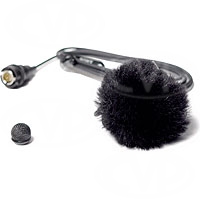 Later Observations. The real test for these wind-shields was dealing with wind noise while mounted on moving vehicles and generally they cope extremely well. You do need to place the mic fairly carefully. Positioning a microphone on a vehicle where the shape of the vehicle is designed to directly alter the flow of air is going a bit far. The front fairing on a motorbike is designed to deflect the wind past the bike and the ride, it is like placing a navigation buoy right in a strong current, it is going to be effected, but placed in more general position these wind-shield work very well. I have mad mics clipped to the wheel arches and exhaust pipes of cars travelling at 100 KPH with not noticeable wind noise thanks to the Rycote covers. Protecting your microphones from the wind is one of the biggest challenges to a sound recordist. There is no one perfect solution. Mic positioning, anti vibration mounts and wind-shields all play their part in countering wind, but this really is a case of the right equipment makes the job so much easier. The Rycote mini wind-shields are definitely the right equipment. In the real world I purchased the Rycote minis to use with my DPA 4061 pair. The microphones were purchased to suit a variety of purposes and I knew I would need wind protection. I tested botht the microphones and the Rycote covers thoroughly before I purchased the items and it was one of my very first recordings that proved just how well these things work. One of the big tests for the DPA 4061 for me was its capability to deal with high SPL output, so as part of testing the unit I attached one to an associates motorbike about 2 inches from the exhaust pipe outlet and asked him to go for a ride. Even at speed the Rycote protected the mics extremely well from wind noise and the resulting recording was one of the primary reasons I decided to buy both the microphones and the Rycote covers. 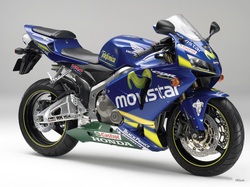  Good They server their purpose well, one of the best solutions in countering wind noise This model has a convenient elastic strap Bad Rycote equipment is not cheap Probably won't help in a hurricane Website http://www.rycote.com Overall Observations Considering I have had my laptop for over 5 years it seems a little redundant to use my usual format of initial thoughts and later observations, so I will give an overall account of my experience with the Dell 9400. I will however say that my initial impression of the 9400 was "wow that's a big laptop and boy is it heavy!". I should probably qualify that statement by describing my expectations of the 9400 when I bought it. I don't use desktops much these days so for me a laptop really needs to function as a portable desktop. As long as it can fit in a bag and is pretty powerful it will suit my purposes. The 9400 when I purchased it was one of the most powerful laptops available, the fact that I am still using it five years later and it is still a capable machine is a good indication that it was a good choice. I have over time upgraded to a larger hard drive and added some more memory, but in general the machine is still the central element of my creative work. My biggest issue with Dell computers is the very poor quality of sound cards that they use. The integrated soundcard on the 9400 is absolutely awful. It does produce sound obviously but it also generates random noise bursts and generally struggles with anything other than basic playback. This might seem an odd choice for someone who is working primarily in sound, but I have never used the on-board sound card to record or transfer sound information. I transfer all files directly from digital storage devices onto the laptop, so the soundcard is just a reference device. If I can hear what the sounds sound like I can do my work. I would strongly recommend to Dell however that they really pay some more attention to their choice of sound cards and drivers. Technical Specs CPU: Intel Core Duo 2.16 GHz Memory: 1 Gig Ram Hardrive: 100 gig 4300 rpm HD Graphics card: Nvidia Geforce Go 7800 256 meg Media access: SD card reader / DVD RW drive Inputs: 6 USB inputs / 1 Firewire / 1 microphone Outputs: SVideo / VGA For me the best reason to purchase a Dell machine is the service they provide afterwards. In the five years I have owned the 9400 I have had a couple of issues with it, in every instance Dell were fast and efficient with dealing with these issues. Even when I was living in a remote country town 700 km north of Tokyo, Dell sent a technician out to where I was living within 48 hours and fixed my machine. As someone who works with and relies on their PC this is critically important. I am aware of friends who have had to send faulty machines from other manufacturers off for 6 to 8 weeks for repairs to be done. This should never be an acceptable situation for any equipment fault, but for a work machine in my mind it instantly removes them as a viable option.  The Dell 9400 might not be the prettiest piece of equipment available, or the most powerful, but I do not buy equipment to look good, I buy it as a tool to help me create audio. As long as Dell continue to provide a good level of service and create powerful machines that are good value for money I will continue to look at Dell first. I will hopefully be upgrading to a new machine sometime this year, so I will be interested to see what is currently available. I recommend you are careful with it in hot climates though. the 9400 can get very hot, I would not recommend using it without good air circulation on extremely hot days because it can overheat the machine if you are really pushing its capabilities.  Good Dells are generally very good value for money Still a useful piece of equipment after 5 years Excellent technical support Bad Awful Sound card Can get very hot Website www.dell.com Initial Thoughts One of the things I like most about Shure mics is, what you see is what you get. They are generally simple, effective and the term robust doesn't go quite far enough in describing how well made they are. Al of this describes the SM 57 perfectly. It is a very standard looking dynamic microphone and although it is designed more for instruments than for voice I find myself using it often when I need a mic for vocalisations. This is mainly because it has a clear pick-up with a short range so I can grumble like a troll into it and it won't pick-up the noise of the air-conditioning unit in the background. I am not sure how useful it will be for location recording and sound effects, but I am happy to test it out. 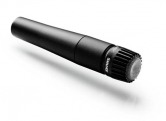 Later Observations Over some time the SM57 definitely confirmed itself as a useful mic for vocalisations; be it goblin or pixie the SM57 handles vocal ranges and sounds very well. Its obvious strength is for instrument miccing as that's what it was designed for. I seldom use a single mic when recording instruments, but I will almost always have this mic in there somewhere. Where it was surprising was for sound effects recording. It deals with high SPL sounds better than I had expected. I haven't yet placed it right at the muzzle of a gun, but I suspect it would deal with it pretty well. In many other situations it is well capable of capturing clear samples of quite loud sounds. I would not choose it for very subtle sounds, but its general recording capabilities combined with it being almost indestructible earns it a permanent place in my kit bag. In the real world The main selling point for the Shure SM57, as well as it's sibling the SM58, for my purposes is the combination of very low price and very high durability. A piece of equipment built as sturdy as a Shure microphone allows you to utilise it for more precarious situations without being concerned for the equipments safety. The low pric also means that should something unexpected happen it is not going to break the bank to replace. I try to be extremely careful with my equipment, but there are times when capturing certain sounds lends an inherant risk to the equipment you are using. The SM57 allows me to work without   Good Very good vocal / instrumental mic Practically indestructible Great price for what it is Bad It won't suit every purpose Not really suitable for very quiet sound sources Website www.shure.com Initial Thoughts The Rode NTG3 is the latest in the NTG shotgun series and Rode's answer to expensive broadcast supercardioid mics. It follows Rode's tradition of solid construction and good value, but can it compete on a level with equipment that is usually much more expensive? I will state here and now that my decision to purchase the NTG3 was not made under normal circumstances. I had recently purchased some other mics and had no plans for further purchases at the time until Rode announced their $1 Blimp offer. I already own a Rode Blimp and I have been so impressed with it that I was planning on buying another in the new year. Rode's $1 offer and the fact that under certain circumstances a second shotgun mic would be extremely useful made the decision easy for me. I had already looked into the NTG3 and it would most probably have been the shotgun I would have chosen. Their special offer just brought my decision forward a few months. I guess that's good news for Rode, but I can't fault an offer that saves me a couple of hundred dollars, and I was happy to make the purchase as my experience with Rode equipment has been nothing but good so far. My very first impression of the NTG3 was that it had a very crisp sound. Its first trip out was a horribly wet and cold day and I was thankful for Rode's claim of high resistance to moisture. I was recording a series of vintage vehicles so it was a good test of both frequency and dynamic ranges as there were a great many clicks and clanks mixed in with low rumbles of the various vehicles. The results were quite surprising, not that I didn't expect the mic to capture good quality sound, but characteristically the sound was quite different from the Sennheiser MKH60 I usually use. The mic itself comes with a good selection of standard equipment, and I personally really like the metal "cigar" case it comes in to protect it. This is a very practical solution that protects the mic without having to carry an entire hard-case around. The NTG3 slips inside easily and the case screws shut from either end. This fits nicely into my gear bag without wasting space. My only worry is that it looks a little like a pipe bomb from a computer game, so it might be interesting to get through customs security. Technical Data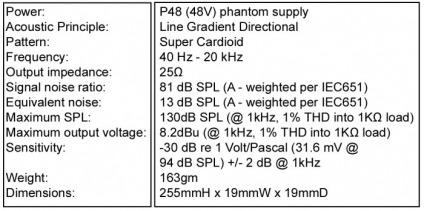 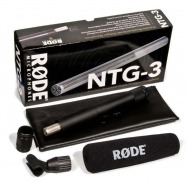 Later Observations I had someone say to me that I would be pleasantly surprised by the quality of sound from the NTG3 and I have to say that after some use I am surprised. I'm not surprised that it is a good quality piece of equipment. I have used enough things produced by Rode to know they make damn good gear, it was more just how good the NTG3 is for its price range. The crispness of sound achieved by the NTG is of a quality I would expect from a microphone closer to twice the price of the NTG3. My first real outing was in the pouring rain with me stumbling to keep things dry and still get good material. It was certainly a trial by fire as I doubt I ever truly aimed the thing properly as I was too busy feeling miserable for myself, and yet the material I got back was beautiful and had an excellent presence. It captured the high frequency material of some old vehicle engines with a sharpness to the sounds without making them harsh. This made it an instant hit in my books. I am sure I will submit the NTG3 to many more challenges in the future, so far I am confident I can trust it to capture a true representation of anything I point it at. In the real world I use shotguns because they are directional and they capture a good sample of the things I point them at. These characteristics can sometimes be critical to a days work. The work I have been doing lately to capture some vintage aircraft has really been a test for most of my gear and definitely my skills, but when it all goes right the results make all the effort worth it. Recordings like this make me very confident to take this mic out in the field day after day. 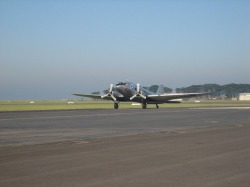  Good Sound quality equal to more expensive microphones Includes excellent accessories Bad They don't make a stereo version Website http://aus.rodemic.com/ Initial Thoughts The DPA 4061 came recommended to me by a fellow sound designer, and as such I probably had fairly high expectations for them right from the start. They were recommended to me as a good mic to place at the business end of a firearm and as such were exactly what I was looking for. I wanted a mic capable of extreme SPL capabilities but that was also small and convenient. My planned use was for firearms and to attach to vehicles in hard to get places like inside the engine bay and next to exhaust pipes. I was initially quite wary of how delicate they appeared and also the fact that the cable is integral to the microphone. The last thing I wanted to do was destroy $800 of mic because I slammed the cable in a car door. As such I decided that I really wanted to hire a pair of these and give them a thorough test before I purchased them. For two days I recorded pretty much everything I could get my hands one, I found the mics to be good for general vocals, which I think is how they were designed, but for me it was the other applications where they really shined. I attached two of them to a colleague’s Honda CBR600 and asked him to go for a ride. One of the mics was directly behind the exhaust outlet and the other mounted on the front indicator. I was using Rycote mini fluffy’s for both mics. The exhaust mic picked up a beautifully clean and clear sample of the exhaust and if I had to mic a bike with only one microphone then this would be my choice. The front mic did get quite a bit of wind noise, but I think that was more from my poor placement than the mic or the fluffy failing. This was the first time I had recorded a bike so it was very trial and error but the 4061 made it feel like a huge success. The small size made these mics so easy to setup. The very thin cables meant I had to be careful, but they also allowed me to position them practically anywhere I wanted. After also successfully recording a friends Nissan 350Z later the same day I decided that these were worth the price so I ordered the special stereo pair kit, the SMK 4061 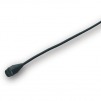 The SMK 4061 is one of the best designed kits I have ever seen. It includes two DPA 4061 microphones, two boundary mic adapters, two magnetic clips, two violin mounts, five mini windscreens as well as two belt clips for the XLR connectors. The only thing I wish it had had was some alligator clips as I use them regularly. (thankfully the great guy at my audio supplier threw a couple in for me) I also purchased two Rycote mini fluffy wind jammers as I knew I would need these for vehicle mounting. This kit provided me with so many options for recording things in unusual situations that working with the DPA mics would become a pleasure of creativity. Technical Data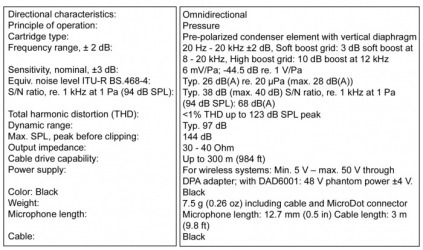 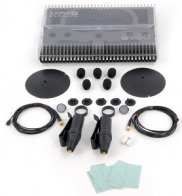 Later Observations After some weeks of using these mics I feel I have missed out by not owning them sooner. In the past weeks I have placed them strategically to capture the sounds of play on a billiards table, attached the boundary mic versions to the inside of a grand piano lid as well as mounting them in multiple locations on a fast moving car among other things. It is unusual to have a microphone that can cope so well with the high output levels of a cars engine also produce such clean clear recordings of a billiard ball softly hitting a side cushion. I am still thinking of the many ways in which I can make use of these mics, but so far their performance has be excellent. The adaptor kit has been very handy, although the adhesive dots don’t adhere quite as well as they could. The main thing I really need to point out is that the cables, while very well made, are extremely thin, so if you are the sort of person to just throw your gear in a bag to sort out later you will definitely need to break the habit with these mics. They are precision gear and as such need to be treated with care, however assuming you do treat your gear well, then these are a great addition to any sound designers’ kit bag. In the real world As I have mentioned, I purchased the DPA 4061 series for a number of purposes, but mostly because of their ability to deal with high SPL. this combined with their size makes them excellent for use on vehicles, and this was going to be an area I would thoroughly test them on. Cape Schanke Victoria, December 2009. having access to a range of military vehicles was something I had been looking forward to for a while and it was certainly going to be a good test of my skills and my gear. I focused on the biggest thing I could find on the day, a Centurion main battle tank, and attached a series of mics to it's turret. The DPA 4061 was attached to the rear of the turret directly above the primary engine. If you have not stood next to a battle tank you might not realise how loud they can be. I am not sure of the exact dB levels where the mics were placed, but it certainly did not seem to bother them. 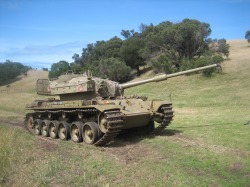 Centurion main battle tank Verdict Good Excellent sound quality Extremely versatile especially with the SMK 4061 kit SPL capable of extreme sound sources Bad Very delicate cable setup sticky dots not so sticky Should include alligator clips in SMK pack Website www.dpamicrophones.com Initial Thoughts Shure make microphones, Shure make very good microphones and generally Shure make microphones that are virtually indestructible. This has been Shure's reputation for many years, and the Beta 58A is not going to detract from that in any way. As an on stage piece of equipment the 58A is a reliable solid piece of equipment, as a field microphone its something that can cope with the adverse conditions that field recording will often place on precision gear. I have had a 58A for ages and never really used it. I always thought of it as a vocal microphone and as such never really thought I had need for it. More recently I discovered this was a poor assumption made at my own expense. I have recently found that the short pickup range of the 58A makes very good at picking up close range sounds without the risk of capturing unwanted background noise. This is a very different approach to using a shotgun mic, but can be just as valid. A shotgun attempts to capture only what you point it at and as such block out unwanted sounds that are “off target” The 58A has a wider response pattern, but a much shorter range, so while it may capture off target sounds, it will only capture sounds that are very close. The Beta 58A also has the trade mark Shure build quality which means you could quite literally drop it off the back of a moving car and still use it afterwards. While risky recording situations are probably better suited for its cheaper cousins the SM57 and SM58, the Beta 58A can be used confident in the knowledge that its going to cope with what you throw at it. From a vocals aspect the 58A is excellent. I use mine mainly for vocal effects, screams and creating monster sounds and I’ve found I can use it almost anywhere to capture voice beautifully cleanly with almost no background noise. This includes standing on top of an office building surrounded by noisy machinery and still capturing only the desired vocal effects. As a dynamic mic the 58A requires no extra power source Technical Data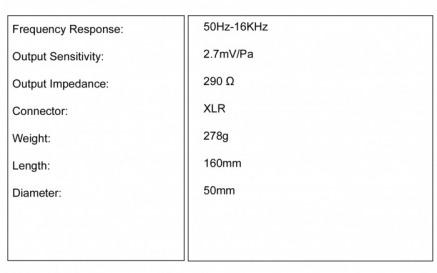 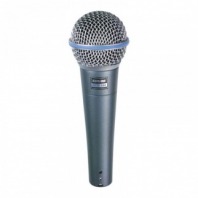 Later Observations As with the MKH 60 I have had the Beta58A for quite a few years. Unlike the MKH 60 I have not used the 58A nearly as much. I can certainly atest to the fact that as a Shure mic it is practically indestructable. As far as sound quality is concerned I have found it excellent for recording human and animal sounds at close range. At the time of writing this it was becoming one of my favourite mics until it was missplaced on a location recording trip. I have not replaced it as yet but plan to at my earliest convineinece as I am more impressed with this microphone the more I use it. In the Real World The Beta58A has the typical Shure build quality as one of tis standout features. This combined with good sound qulaity make it an excellent mic to use in situations where you might fear risking other equipment. The Beta 58A does not have the extreme SPL capabilities of more specialist microphones, but it is still capable of capturing high signal levels. This and its durability make is a natural choice when one has the opportunity to record a 100 year old Howitzer. 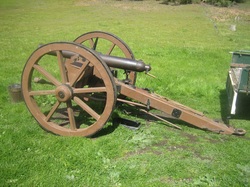 Verdict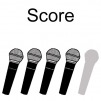 Good Practically indestructible Good quality sound capture with surprisingly low background noise for the response pattern Bad Not quite cheap enough for me to own ten of them Website www.shure.com Initial Thoughts Redhead windscreens is a small company that saw a need for something and went ahead and created it. The growing popularity of small digital recorders such as the Zoom H4N means there is likely to be a growing market for companies like Redhead and their products such as the H4N Custom Windscreen I have owned an H4N since they first came out and its one of my main pieces of equipment. I use it weekly and its 4 track capability means I can record on the two external input channels as well as use its built in stereo mics simultaneously. I have adopted this as my standard practice on most location recording trips as the H4N's own mics are quite good. They do however, like most mics, need to be shielded against wind when used outdoors. Up until recently I have been using a standard sized fluffy cover designed for use on several sizes of mic, so the cover is much too big for the H4N and sags over the display area, can fall off easily, and generally just isn't built for the purpose I am using it for. Along comes the RedHead to save the day! Sent to me by a fellow sound designer the web page for the RedHead is simply and straight forward. It has a few pictures, some information and a link on how to order. You can even choose from a range of colors. Initially I thought of grabbing a couple as they are priced fairly reasonably, but I thought I'd test one out first and then if it works as expected I can order another one. It also just happened to be the perfect thing to ask my wife to buy me for my birthday. She ordered it online and it arrived in Australia from the makers in Hawaii in about 3-4 days which was awesome service. I of course ordered the bright red one, so now my H4N looks like its disguised as Elmo from Seasame st. Initially I didn't think it was working very well as I went straight up to the roof of the studio and tested it out. I got a bit of wind noise coming through and was a bit disappointing, but then when I changed back to the cover I have been using for the last 6 months I still got wind noise. Maybe being ten floors up in Melbourne was a bit of an unfair test. After a few more standard tests it seems to work about as well as the cover I have been using previously. I have only had it now for a few days so I can not be certain, but it looks like it will do its job as required. From a practical purpose it is much better than the non custom one I have been using. It is much smaller and so packs away more easily. It has an elastic base that helps it attach to the H4N securely and it doesn't obscure the display at all. In fact I am pretty confident that it attaches so well I could use this in quite difficult situations without any fear of it dislodging from the recorder which is really good to know. It will take some more time to really get a feel for it, but so far I think it was money well spent. 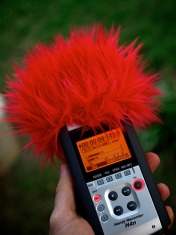 Later Observations After using the Redhead windscreen for a while now it is pretty much a permanent fixture on my H4N. I have started the carry the H4N around as my regular emergency recorder instead of the R09 because even though its bigger it is a far better unit. As such the Redhead travels with me most days as well. It is obviously not going to be as effective as a full blimp cage and fluffy, but it is easily as good as any of the other single layer screens I have tried. Verdict Good Fits Well on the H4N Good range of colours Reasonably priced Bad Nothing so far Price US $39 Website http://www.redheadwindscreens.com/ Initial Thoughts Lowepro have a long history of making quality bags, packs and pouches and their current range provides many options for protecting high tech gear. Often the biggest difficulty is choosing which product is the right one for your needs. The Flipside 200 is a compact gear backpack with a slightly unorthodox design but with a wealth of features. Since returning to Melbourne I have been trying to work out the best way to transport my gear. I have various cases and bags and I can often just pack the things I need into whatever bag I have available, but I have found this increasingly frustrating as I sometimes forget certain things or find it difficult to find pieces of gear in a hurry, so I decided to buy myself a dedicated kit bag for location recording. I have used Lowepro products in the past, my old portable DAT still lives in a Lowepro camera bag, and I also had a Lowepro slip case for my Camera before I lost it in Japan. (just the case, the camera was in my hand at the time). They seem to have a good reputation, and after owning a couple of their products I can see why. Not only are their bags very well constructed being tough and practical, there are a huge range of designs to choose from that really increase your chances of finding what you need. I also did have a slight issue with a Lowepro a few years back and the service response to my issue was pretty impressive, so overall I was happy to put them at the top of my list. Again I looked through a range of Camera equipment bags as these are designed to protect high end equipment and help store it in a logical and practical fashion so it was ideal for my audio gear. I spent about ten minutes checking various bags in the store and then realized the best option was to come back with all my gear and find something that worked exactly, so that's what I did. The Flipside bag comes in two sizes, but I really wanted to keep the size down for ease of movement when I am out in the field. The 200 model seemed big enough for my gear without being cumbersome. It has several Velcro dividers that could reposition to create slots for various mics and a smaller zip compartment that was perfect for my leads. The side pocket has specific pockets for SD cards and pens as well as enough room to carry a bunch of spare batteries. What I liked the most was that the zipper opening for the main compartment is against your back when you wear it, so it is practically impossible for things to fall out, or for hands to sneak in making this an excellent choice for security. It is also a very comfortable backpack. Lastly the back of it has a special clip to attach a tripod onto with a flip out pocket to place the tripod legs into. This clip can easily hold my tripod and my microphone blimp setup. So far this bag is doing a very good job of holding everything I need it to, I have taken it on planes in the overhead lockers, hiked fair distances with it and used it in a range of conditions without any real issues. There are still a few things I would like to put it through to see how it copes with adverse conditions, but so far its been a real winner. Technical Data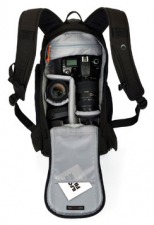 Capacity: 1 DSLR with 80–200mm f/2.8 lens attached plus 1–3 additional lenses or flash units, 1 tripod, multiple cables, memory cards, manuals and other digital accessories Size(Interior): 7W X 5D X 15H in./17.8 X 12.6 X 38 cm Size(Exterior): 8.6W X 6.2D X 16.5H in./21.8 X 15.7 X 42 cm Weight: 2.2lbs/1kg Later Observations Well it doesn't seem to matter what size bag you get, you will always fill it and need more space. Having said that, the Flipside is coping admirably with the amount of stuff I pack into it (probably better than my spine is). One of the best thinsg about Lowepro bags is that you really can stuff them to capacity and not worry about if the zips are going to break, or the stitching split. Its nice to have a product that can actually cope with doing its job. I have found the Flipside 200 to be very comfortable to wear for long periods of time and the added chest strap makes it possible to run when necessary without the pack moving much at all. I would still have liked a couple more of the Velcro dividers inside, but that really is the only issue I can find for this piece of gear. Oh one last point, I carried this with me on my recording trip on 22/11/09 to a classic car display and it was absolutely pouring with rain all day. I got soaked, any gear I was carrying in my hand got soaked, but absolutely everything inside the Flipside was bone dry. I wouldn't recommend immersing it in water, but apart from that, I suspect it will deal with just about any level of rain. Verdict Good Well designed Well constructed Useful features Bad Should come with more dividers Website http://www.lowepro.com/ |
 RSS Feed
