|
I had noticed about a week ago that the sheets of plastic that were being used as temporary roofing at Southern Cross Station made a lot of noise when there was strong wind. Essentially they have replaced all the glass sections of the roof that collapsed under the big storm with giant rolls of plastic. As that part of the city is very windy it spends a lot of the time flapping and blowing in the wind, and in extreme winds it sounds really interesting. I had tried a couple of times to record this, but they were at times when the station was pretty busy so there were a lot of other noises to contend with. A growing wind storm on a Sunday evening however proved to be a good time to capture some sounds. Our public transport system here in Melbourne is pretty ordinary, and on Sundays the trains are up to an hour apart; terrible if you want to go anywhere, but very convenient if you want to record a quiet station. 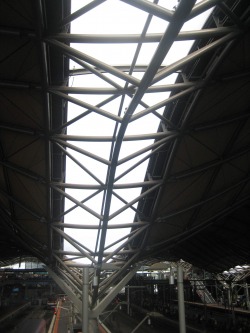 The plastic sheets run the entire length of the station What I did find unusual this evening was how quiet people were. I set up at the top of one of the platforms and extended the boom pole as high as possible. I wanted to get as close to the plastic as possible to get a good recording and also to reduce all the other noises around. Normally when I go anywhere with the gear people tend to yell, ask if I am shooting TV or want to say hello to their mum, but tonight just about everyone walked past really quietly, I even had some people stand back and wait for a while as if they didn't want to make any extra noise. This was really great but it was also very unusual as people often either don't notice me, or as I said, purposefully make more noise.
I was very patient as there were still trains and station announcements, so I stood completely still for about 20 minutes while I recorded. Overall I got some good samples. I am not really sure what I am going to do with the sounds. They do have a quality a little like thunder, so maybe I can find some interesting uses for them. Either way they will get added to the library and perhaps someone else can think of something interesting to use them for.
0 Comments
Location Melbourne Equipment Zoom H4N Rode NTG3 Today is my first day out of full time employment and being able to concentrate on building Sound Library as much as possible. There are still a few regularly available sounds I want to capture around Melbourne and its suburban area. I have already collected a few train and tram sounds, but I have never done a thorough list of everything available, so i am going to work to collect a comprehensive list. I started the day at our major train station which is also a convenient 10 minute walk from home. 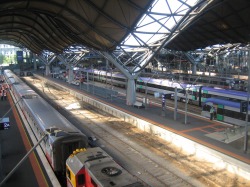 Southern Cross Station After about 30 minutes I had collected a fair amount of general station ambience as well as a few specific train sounds and some shunting noises. I am going to come back soon to capture some more and I will probably spend a day on various trains capturing interior travel sounds as well. Next I moved on to one of our trams as I wanted to record some tram sounds as well, but I also wanted to travel down to the beach to record some various wave sounds. We have about four different models of trams that run on the Melbourne network so today was a good day to capture some of those, but again I'll need some more time to get the whole set. We have a unique system here called light rail which is using old train lines to run trams along. This isolates the tram from normal roads and allows them to run a little faster and is cheaper than running full trains along those lines. Its also a great place to record some tram sounds away from noisy traffic. 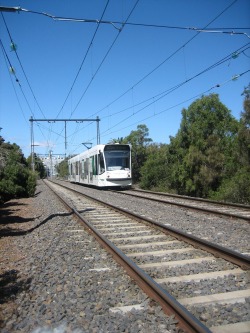 Light rail tram Once I made my way to the end of StKilda pier I set myself up on the rocks and captured some material of the waves on the rocks. It was a very calm day so I have some good material for mild wave movement. I expect some day I am going to have to come down here in a big storm and record some bigger waves, although I'm not really looking forward to that. After the rocks I made my way along the pier and stumbled across some divers scrapping the pier pylons as part of general maintenance. Its not everyday I get to record people welding shovels underwater, so I through the hydrophone into the sea and captured some interesting material. The divers were a little unsure what I was up to and one of them almost cut my mic cable thinking it was a rope snag, but it was all good. Next I headed down to the beach to record some gentle waves on the sand. 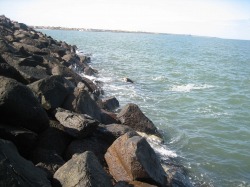 Well its been a long time since I have updated the journal because I have been really busy uploading data and sound files to the server and testing out the Sound Librarian search tool. As well as all that I have been trying to get the web page all finished ready fro launch. Well, Phase one is complete and the sound library is up and running. 13,000 sounds at launch which I am really happy about.  Logo available for projects We have had a minor issue with proxy server comparability which should be fixed in the next few days, then we will get to work on the Mac version of Sound Librarian which we hope to launch later this month. Also later this month we will be launching the DVD set for users who want the convenience of having the entire library at their fingertips. There is still lots of ongoing work, but soon I should be able to get back to what all this is for, which is recording new sounds to continually add to the library. Keep an eye out for new information and you may even see us in the media as I try to get as much coverage for Sound Library as I can. Its going to be a busy year, but I am really looking forward to it.
Location Docklands Melbourne Equipment Zoom H4N Rode NTG3 Tripod setup & Zoom H4 Rode NT4 Mic Stand & R09 I am very close to finishing the work on the library and we should be uploading all the sounds in the next week. I don't really like spending all weekend indoors at the computer but this weekend it turned out to be a good thing anyway. Melbourne had one of its typical summer storms, lots of thunder, lightning and rain, except this time it was lots and lots of hail. I haven't seen a storm like this in years, and I suspect the damage bill afterwards is going to be pretty big. From the apartment the sky turned white, and I could barely see the apartment building that was 200 meters away. The sound was great and I very quickly had all my microphones lined up pointing out the balcony door. Hail has a much heavier sound to it that rain for obvious reasons, so it was great to record so much material. 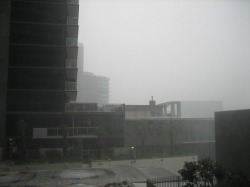 Even after the hail and turned to rain and mostly stopped I left my gear recording as there was some good water dripping sounds and still water flowing from the drainpipes which I thought was good to capture. I'm really glad I did to because there were some massive thunder claps after most of the storm had finished. Good thunder is hard to capture and I have been really lucky over the last year to get some very good samples. Location Melbourne Equipment Zoom H4N There are some things I think you would only ever see in Australia, and some only ever in Melbourne. We were out at the Docklands showing Anna's Aunt and Uncle around as they were visitng on holiday so we thought we could have lunch nice and close to home and show them the new areas. As always I was carry a recorder (today it was the H4N) In the public events area there were a bunch of people doing some celebration dances for Chinese new year. This meant we got to stop for a while and watch the dance I managed to record the drums and cymbals they play with the dragons. I have recorded Chinese new yeararade music before, but there are lots of different rhythm patterns and variants so it was good to capture a new one. The dancers were good and it was nice and colorful which is one of the things I love about Chinese new year. 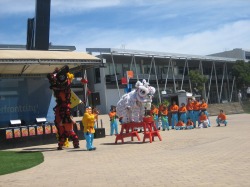 Chinese New Year Dragons Chinese dragons are not that unusual in Melbourne, we have a big Chinese community and around new years time there are lots of shows on and I think they are a popular and important part of the city, however when you combine them with Morris dancers only about 100 meters away then you have something that doesnt occur in many places. We arrived at the bar resteraunt we were heading to, only to find a group of morris dancers outside the pub drinking and practising their dances. They had bells strapped to their legs and canes and a couple of people with old accordians. They jumped and pranced about to music that sounded very appropriate for your local pirate party. I set my recorded on a nearby wooden keg (now I am really feeling like I am in pirate land) and recorded a couple of their dance tracks. Its certainly not the type of music I would choose to listen to every day, but it be great to use in the right kind of game project. 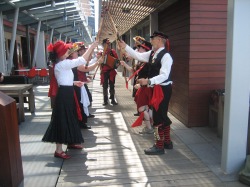 Location Melbourne Equipment Zoom H4N and an umbrella After being miserable in Melbourne last year because of all the rain, I was really happy to see it pouring down today. I got some really good feedback from my brother recently regarding the sounds in the library. He had looked through all the ambiant and environmental sounds and thought that many of them weren't long enough. I think my time in the game industry is responsible for this, as for games we tend to use shorter sound files and edit them to fit them into memory, however for something like film or TV a sound designer may want 3,4 or 5 minutes of a continuous atmophere to use in a scene. As a result I plan to go out and rerecord alot of my more common elemental material such as waves ,wind and rain. Today it was rain's turn. It was raining heavily after a few days of hot weather, so I stood outside the studio on a busy Melbourne street and recorded the people and traffic and the rain. Then I opened my umbrella and stood int he rain for 5 minutes or so to recordthe sound or rain on the umbrella. Finally I went up onto the roof of our building and was lucky to capture a couple of nice thunder claps. For thr moment at least I plan on making use of the weather any time it rains. I am sure I will get sick of the rain quickly enough once winter turns up. I finally found some very old source material I have been looking for for ages. I knew I had it somewhere and I wanted to add it to the library. Years ago I was working on a pitch for a game project that subsequently went nowhere, but I did enjoy making some of the sounds for it. One of the primary sounds was a giant explosive scream that the main character had as an ability. It was supposed to be pretty much the biggest thing int he game and as such needed a big sound. I spent some time at home screaming into a mic to get some good raw material to work from. It was that the screams are particularly brilliant, although I do think they worked fairly well, it is more that it took over a week for my throat to heal as I seriously damaged it from screaming so loud. For this reason alone I wanted to make sure the sounds found their way into the library because I am certainly not going to try and record them again. Looking back at the old project files I can see how I put it together and even now its not too bad an end result. I think I was having so much fun working on it that I really put a lot of effort into the final sound. This would have been 8 years ago at least and back then I didn't spend the same amount of time on recording raw material, so I am really glad I found the old source material for this. I won't add the final sound to the library, but I will put it hear as a taste of some of the crazy things I used to get up to working on pitch ideas. Location Melbourne Library update I now have the database tool in my hot little hands and after some tweaking will be ready to start inputting all the data for the current library sounds. That's nearly 13,000 sounds to be added to the database. As soon as that is done the full Sound Library website will be ready to go live. On target for a February launch. I am very happy to be so close to finally going live with the full site. As part of preparing the library for launch I have been going through and checking all the sounds, making sure they are levelled well and generally have no problems. Initially I did not included many stereo sounds in the library, but I have been going through all the raw material and where available replacing the sounds I down mixed to mono with stereo versions.
Initially I think I was trying to reduce file sizes as most of the ambiance sounds were already quite long, but the ambiances also benefit more from being stereo than most other sounds. I really need to get a stereo shotgun mic so I can record the majority of my material in stereo initially as currently most of my samples are recorded in mono. I would not always choose to include stereo versions of all sounds, but I do think I should increase my options when recording raw material. Over the years I have evolved the way in which I record my raw material with a wider range of microphones available and better equipment to capture sounds, but there will always be room for improvement, so this year I plan to add both stereo and surround sound versions of a range of material. Location Melbourne Equipment Zoom H4N H2a XRL Well this turned out to be a disappointing experiment. I have been thinking about doing a lot more recording with the hydrophone as I have captured some great material and want to continue to see what interesting results I can come up with recording under water. I decided to see if I could capture the sounds of ice cracking as it froze and melted so I placed the hydrophone into a plastic container, filled it with water and put it in the fridge. I attached the H4N to the mains power supply so it could run without fear of battery failure and left it on all night. 5 hours worth of recording later I an have nothing at all except the background hum of the refrigerator. Ok, so maybe ice doesn’t make much noise while its freezing, but I thought at least it would crackle and snap as it thawed out. So the following night I took the whole lot out of the freezer and left it to melt, again with the recorder running. Sadly I recorded another 5 hours of absolutely nothing. I was disappointed, but more than that I was very surprised, I really thought there would be some sound generated as the ice melted. I am going to do some more tests on this, but so far it has been a bit of a failure. 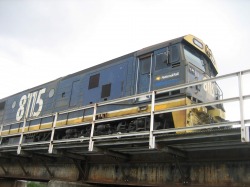 On a more positive note I did record a train today. There is a major freight terminal not far from where we live and some pretty big freight trains head out across the creak at the edge of the terminal. This means they spend several minutes clunking across the old metal bridge which makes a great sound. Anna and I were going for a walk as one went past so I got out the Zoom H4N which I was carrying and got some material. The sound these things make is pretty impressive and I want to find out if there is a regular schedule for them so I can bring down all my gear and do a proper recording session. Placing some mics right on the edge of the bridge would get some awesome sounds as these trains can be really heavy. For today I got a good short sample that I will use as motivation to get more.
Location Melbourne Equipment Dell Inspiron 9400 laptop I am continuing the process of creating some more sounds through manipulating recorded material. I have been getting some excellent and surprising results from stretching the sound files. In some cases I am using extreme stretch functions to create new sounds and the results have been a lot of fun. Most of the resulting sounds have a ghostly quality to them, and many of them would be very useful for science fiction or fantasy type sound effects. The most surprising result was a series of sounds that sound very much like whale song, but with a metallic quality, so I named them all Cyber whale calls. I’m sure they will be very useful for all those people who need the sound for a cybernetic whale singing. I still want to add more melee weapon sounding effects and a new task for next week is to try and create sounds for magic and spell effects, I have never created anything of this nature so it will be a good challenge for the week. |
AuthorStephan Schütze has been recording sounds for over twenty years. This journal logs his thoughts and experiences Categories
All
Archives
April 2019
|
 RSS Feed
